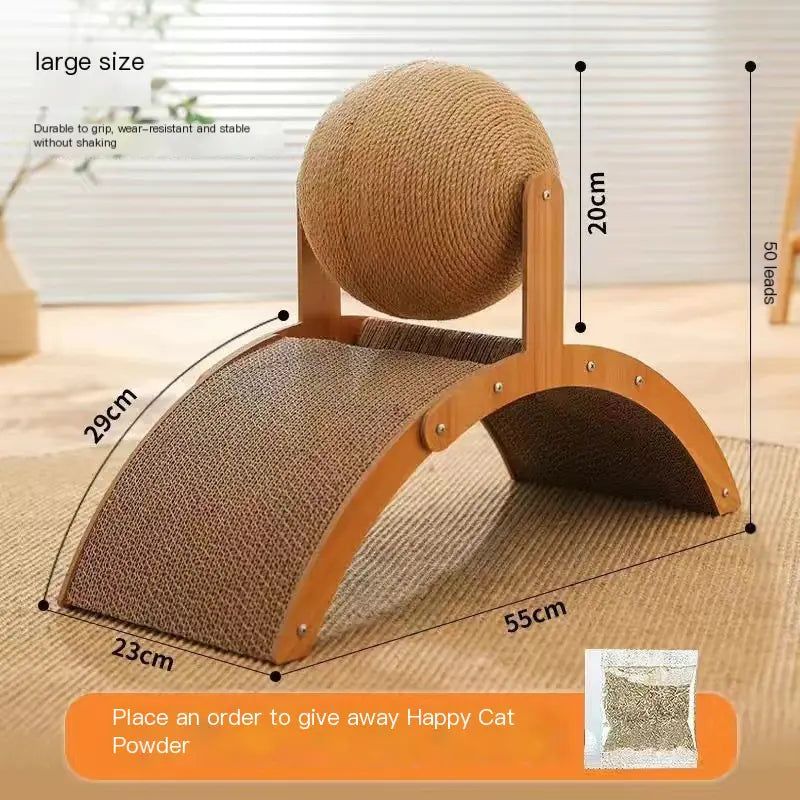
To stop cats from scratching furniture in 2026, redirect the behavior instead of trying to eliminate it. Put a stable scratcher directly beside the damaged spot, match the direction and texture your cat already chooses, protect the furniture temporarily, and reward the correct choice within 3 seconds. A vertical sisal option such as the CatBall scratching post fits cats that stretch upward while scratching. The best setup makes the approved surface easier and more satisfying to use than the couch.
- The best 2026 fix redirects scratching; it does not try to stop a normal feline behavior.
- Place a stable scratcher directly beside the furniture and match your cat's preferred angle and texture.
- Reward correct scratching within 3 seconds, then repeat the same response every time.
- Use temporary furniture protection while the new scratching habit becomes easier to choose.
- Persistent or sudden scratching can signal stress, discomfort, or an environmental change worth discussing with a veterinarian.
Why this matters
Scratching is normal for cats. The ASPCA explains that cats pull their front claws through resistant surfaces to mark territory, exercise muscles, relieve stress, and remove worn nail sheaths. That means punishment attacks the symptom without meeting the need behind it.
A better 2026 plan gives your cat an acceptable surface in the location they already value. It also removes the immediate payoff from the furniture. When those two changes happen together, your cat gets a clear, repeatable choice.
How to stop cats from scratching furniture
Use this sequence rather than buying a scratcher and placing it in a distant corner. Each step answers a different reason cats ignore new scratching furniture.
1. Record what your cat is choosing
Watch the scratching for several days before changing the room. Note the exact object, location, direction, and surface.
- Vertical scratching on a couch arm points toward a tall upright post.
- Horizontal scratching on carpet points toward a flat pad.
- Scratching after sleep suggests placing an approved surface near the favorite resting area.
- Scratching near a doorway or busy room may be connected to visible territory marking.
- Repeated use of one fabric tells you more than the product label on a new scratcher.
Do not guess based on what looks best in the room. Your cat's current behavior is the clearest buying guide.
2. Match the angle, texture, and resistance
Cat Friendly Homes, a resource powered by feline veterinarians, says most cats prefer vertical scratching and need a post taller than their body length so they can fully stretch. Cats that choose carpet may prefer a horizontal scratcher instead.
Texture matters too. Sisal rope, corrugated cardboard, carpet, and wood feel different under the claws. Start with the closest safe match to the surface your cat already uses, then offer a second texture if the first choice is ignored.
Resistance is just as important. A lightweight post that rocks, slides, or tips during a full stretch can lose against a heavy couch immediately. Choose a stable base or secure the scratcher so it stays still under normal use.
3. Put the scratcher beside the damaged spot
Location is not a finishing detail; it is part of the solution. Put the new scratcher directly in front of or beside the couch arm, chair, carpet edge, or doorframe your cat targets.
International Cat Care recommends placing scratching options where cats spend time and near beds because cats often scratch after sleeping. Once your cat uses the approved surface consistently, move it only a short distance at a time toward the place where you want it permanently.
Avoid hiding the scratcher in a spare room. A perfect post in the wrong location is less useful than a basic pad exactly where your cat wants to scratch.
4. Make the furniture temporarily less rewarding
Protect the targeted area while you build the new habit. The ASPCA lists double-sided tape as one option for making furnishings less attractive to scratch. A fitted cover or a physical barrier can also interrupt access without frightening your cat.
Test any adhesive or covering on a hidden section first. Do not use essential oils, homemade chemical sprays, or anything your cat could lick without checking its safety with a veterinarian.
Keep the approved scratcher beside the protected area. Blocking the couch without providing a replacement leaves the original need unsolved.
5. Reward the correct choice immediately
When your cat approaches, touches, or scratches the approved surface, reward the behavior. Cat Friendly Homes advises giving the reward within 3 seconds so the connection is clear.
Use whatever safely motivates your cat:
- A small treat
- Catnip, if your cat responds to it
- A favorite toy
- Petting or grooming
- A brief interactive play session
VCA Animal Hospitals recommends building the behavior in steps: reward approaching the post, then touching it, then scratching it. If your cat returns to the furniture, calmly redirect them to the scratcher and reward the correct action there.
Keep food rewards within your cat's nutrition plan. VCA advises limiting treats to 10% of total daily calories, with the remaining calories coming from a complete and balanced diet appropriate for the cat's life stage.
6. Add play and environmental variety
Scratching may increase when a cat is bored, stressed, seeking attention, or reacting to a change in the home. Add predictable play, resting places, hiding spots, and safe opportunities to climb rather than treating the scratcher as the entire solution.
The Interactive Electric Cat Toy is one Vantora option for supervised play and movement. Rotate activities instead of leaving every toy available all day. A toy is not a substitute for a scratching surface, but play can help meet a separate need for movement and hunting-style activity.


7. Maintain claws without removing them
Regular nail trimming can blunt sharp tips and reduce damage, but it does not remove the need to scratch. Ask a veterinarian or groomer to demonstrate safe trimming if you are unsure where the living tissue begins.
Temporary nail caps are another option for some households. Cat Friendly Homes notes that these usually need to be reapplied every 4–6 weeks. They still do not replace a scratcher or behavior plan.
The ASPCA opposes declawing and describes it as amputation of the last digital bone on each front toe. Its 2026 guidance favors scratching surfaces, nail trimming, temporary furniture deterrents, and behavior modification instead.
Choose the right scratcher for the pattern
Use the behavior you recorded to select the first option.
| What your cat does | Start with | Placement | Main limitation |
|---|---|---|---|
| Stretches upward on a couch arm | Tall, stable vertical post | Directly beside the couch arm | Fails if it wobbles or is too short |
| Pulls at carpet or rugs | Horizontal cardboard or sisal pad | Over or beside the targeted edge | May slide unless secured |
| Scratches both directions | One vertical and one horizontal surface | In the same active room | Takes more floor space |
| Scratches after waking | Stable post or pad matching the angle | Beside the sleeping area | Easy to miss if placed across the room |
| Targets several rooms | Multiple approved surfaces | One near each repeated location | Requires consistent rewards in every room |
Vantora's CatBall scratching post is best suited to cats that prefer an upright stretch and sisal texture. Skip it as the first choice if your cat consistently scratches flat carpet; a horizontal pad matches that pattern better.
Why the scratching plan varies
The same setup does not fit every cat. These factors change the best response:
- Direction: Some cats prefer vertical surfaces; others choose horizontal or angled ones.
- Texture: Sisal, cardboard, carpet, and wood create different resistance.
- Location: A scratcher near a bed, doorway, or targeted couch may carry more value than one hidden away.
- Stability: A moving post can feel less satisfying than solid furniture.
- Stress: New pets, visitors, moving furniture, or changes in routine can affect marking behavior.
- Physical comfort: A sudden change in scratching or movement can justify a veterinary check, especially when paired with hiding, stiffness, or reduced play.
What not to do
Do not punish your cat
Yelling, spraying water, or physical correction can add fear without teaching the approved behavior. Cat Friendly Homes warns that punishment can intensify anxiety and unwanted scratching. Redirect calmly and reward the right surface instead.
Do not move the post too soon
The first goal is correct use, not perfect room design. Keep the scratcher beside the damaged area until the new choice is consistent. Move it gradually only after your cat repeatedly selects it.
Do not force your cat's paws onto the surface
Dragging a cat to the post or moving their paws can create a negative association. Use a toy, catnip, attention, or a small food reward to encourage voluntary contact.
Do not rely on one universal texture
A cat that scratches carpet is giving you a different clue from a cat that scratches a wooden doorframe. Offer the closest safe match first, then test another material if needed.
How quickly should you expect a change?
There is no honest universal deadline. Progress depends on how closely the new scratcher matches the existing habit, whether it stays stable, where it is placed, and how consistently everyone in the home redirects and rewards.
Judge the 2026 plan by behavior rather than the calendar. Track whether the approved scratcher is used more often and whether new damage slows. If there is no movement, change one variable at a time: location first, then angle, texture, or stability.
Should you trim your cat's claws?
Regular trimming can reduce the sharpness of claw tips and limit damage, but it does not stop normal scratching. Use trimming alongside an approved scratching surface, not instead of one.
If your cat resists handling or you have never trimmed claws before, ask a veterinarian or groomer for a demonstration. Stop if your cat becomes distressed.
When should you call a veterinarian?
Contact a veterinarian when scratching changes suddenly, becomes intense, or appears alongside hiding, aggression, overgrooming, appetite changes, stiffness, or reduced activity. Persistent scratching can be connected to stress, discomfort, or insecurity, and a professional can help separate medical and behavioral causes.
A veterinary behaviorist or qualified feline behavior professional is also appropriate when careful environmental changes do not help. Bring notes about timing, locations, household changes, and what you already tried.
FAQ
What is the fastest way to stop a cat scratching the couch?
Place a stable scratcher directly beside the targeted couch area, cover that area temporarily, and reward scratching on the approved surface within 3 seconds. Match the couch scratching angle and texture as closely as possible.
Why does my cat scratch furniture when a post is available?
The post may be in the wrong location, too short, unstable, or made from a texture your cat does not prefer. Put it beside the furniture and use your cat's existing scratching pattern as the guide.
Should I punish my cat for scratching furniture?
No. Punishment can add fear or stress without teaching the correct surface; calmly redirect your cat and reward approved scratching instead.
Is a vertical or horizontal scratcher better?
A vertical scratcher is better for cats that stretch upward, while a horizontal pad fits cats that scratch rugs or carpet. Some cats need both directions available.
Can trimming claws stop furniture damage?
Trimming can blunt the claw tips and reduce damage, but it does not remove the normal need to scratch. Pair trimming with an appropriate scratching surface.
Where should a scratching post go?
Start directly beside the furniture your cat scratches or near a favorite sleeping area. Move it gradually only after your cat uses it consistently.
What should I put on furniture to stop scratching?
Double-sided furniture-safe tape or a temporary fitted cover can make the area less rewarding. Test materials on a hidden spot and avoid unsafe homemade chemical deterrents.
Does cat scratching mean my cat is stressed?
Scratching is normal, but a sudden increase can accompany stress, anxiety, attention seeking, or insecurity. Speak with a veterinarian when the change is abrupt or appears with other behavior changes.
One last thing
In 2026, the most useful question is not “How do I make my cat stop scratching?” It is “How do I make the correct scratching place the obvious choice?” Match the surface, put it where the behavior already happens, protect the furniture, and reward the switch immediately.
Explore Vantora's pet supplies collection for scratching, play, walking, communication, and comfort options.