If your dog paces before storms, shreds bedding when you leave, or can't settle during the Fourth of July, the right toy can lower the temperature fast. Best overall: snuffle mats. Best for separation anxiety: lick mats. Best budget option: weighted plush toys. Here's how each category stacks up and which one fits your dog's specific trigger.
- Snuffle mats top the list of best calming toys for anxious dogs because foraging behavior lowers heart rate fast.
- Lick mats work best for dogs with separation anxiety — the repetitive licking motion is self-soothing.
- Weighted plush toys are the simplest budget pick for dogs who calm down by nesting or cuddling.
- Puzzle feeders suit bored, understimulated dogs more than dogs with true fear-based anxiety.
- Durable chew toys matter most for dogs who stress-chew furniture, leashes, or their own paws.
Why this matters
Anxiety in dogs shows up as pacing, whining, destructive chewing, or shutting down entirely, and it doesn't respond to one universal fix. A dog with noise phobia needs a different tool than a dog with separation anxiety, and picking the wrong toy just means it sits untouched in a basket. This matters even more for small dog breeds, which tend to startle more easily and often need lower-intensity calming options than large breeds.
The goal in 2026 isn't to buy every toy on the shelf — it's to match the toy's mechanism (licking, sniffing, chewing, weight) to your dog's specific anxious behavior. That's the difference between a toy that gets used daily and one that gets ignored by week two.
What makes the best calming toy for an anxious dog
- Matches the anxiety type — noise phobia, separation anxiety, and boredom-driven stress each need a different mechanism
- Engages a calming behavior, not just distraction — licking, sniffing, and chewing all lower canine heart rate
- Durability appropriate to the dog — an anxious chewer destroys a flimsy toy in minutes, which can spike frustration instead of calm
- Safe unsupervised use if it's meant for crate time or when you're not in the room
- Easy to reset — mats and feeders you can refill quickly get used more consistently than one-and-done toys
- Size-appropriate weight and texture for the dog's breed and age
Calming dog toys at a glance
| Category | Best for | Standout feature | Key limitation |
|---|---|---|---|
| Snuffle mats | General anxiety, food-driven dogs | Forces slow sniffing, which is proven to lower arousal | Needs washing after messy kibble or wet food |
| Lick mats | Separation anxiety, home-alone stress | Repetitive licking self-soothes for 10-20 minutes | Needs a fridge-safe fill to last long enough |
| Weighted plush toys | Nesting, cuddling, nighttime settling | Simple, no setup, works in the crate | Doesn't help food-motivated or destructive chewers |
| Puzzle feeders | Boredom-driven restlessness | Keeps the brain occupied longer than a chew | Less effective for true fear-based anxiety |
| Heartbeat/heat-pack plush | Puppies, new-home adjustment | Mimics a littermate's warmth and rhythm | Loses effectiveness once the dog matures past the adjustment period |
| Durable calming chews | Stress-chewing, destructive anxiety | Redirects chewing away from furniture and paws | Needs breed-appropriate hardness to avoid quick destruction |
1. Snuffle mats: best calming toy for general anxiety
A snuffle mat hides kibble or treats in fabric strips, forcing your dog to sniff and forage instead of pace or bark. Scent work is one of the most reliable ways to shift a dog out of a stressed state because it occupies the same part of the brain that drives anxious scanning behavior.
Snuffle mat pros:
- Works for almost any anxiety trigger, not just one specific scenario
- Slows down fast eaters, which doubles as a mealtime tool
- No batteries, no moving parts to break
Snuffle mat cons:
- Requires hand-washing or machine-washing on a gentle cycle regularly
- Dogs who aren't food-motivated may lose interest fast
Best for: anxious dogs of any size who are motivated by food. Verdict: Buy.
2. Lick mats: best calming toy for separation anxiety
Lick mats use a textured silicone surface loaded with a spreadable filling. The dog licks for an extended stretch, and that repetitive motion releases calming hormones similarly to how a pacifier works for an infant. Vets frequently recommend them for the first ten minutes after you leave the house, which is when separation anxiety spikes hardest.
Lick mat pros:
- Longest calming window of any toy on this list when frozen
- Doubles as a distraction during nail trims or vet visits
- Dishwasher-safe on most models, easy to reuse daily
Lick mat cons:
- Needs a fridge or freezer to extend the lick time
- Not durable enough for dogs that try to chew through the silicone
Best for: dogs that panic in the first few minutes after you leave. Verdict: Buy.
3. Weighted plush toys: best budget calming toy
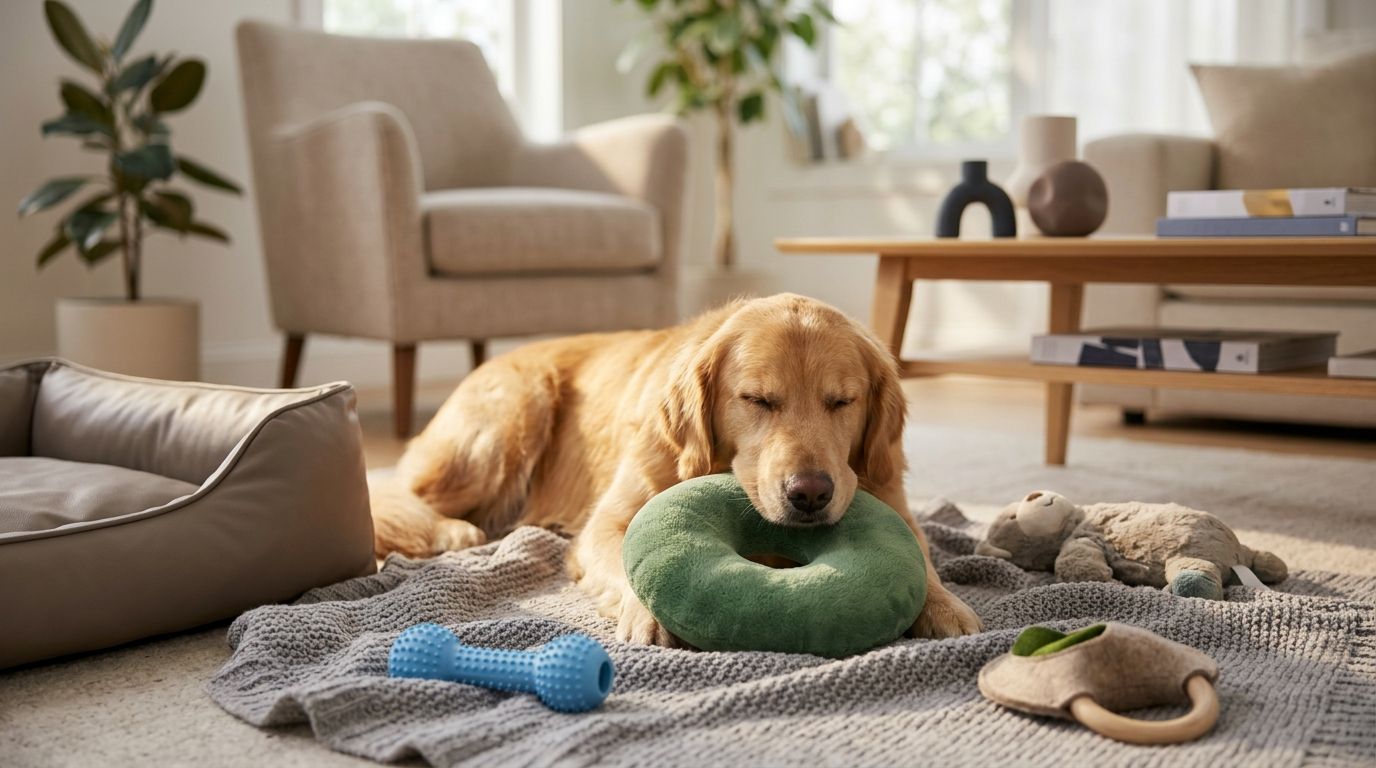
A weighted plush mimics the feeling of another body pressed against the dog, similar to how a weighted blanket works for people. Dogs that calm down by nesting into blankets or pressing against your leg respond well to this category, and it requires zero setup or maintenance.
Weighted plush pros:
- No prep, no freezing, no refilling — grab it and go
- Doubles as a comfort object during travel or vet visits
- Machine-washable in most cases
Weighted plush cons:
- Does nothing for food-driven or destructive-chewing anxiety
- Aggressive chewers can destuff it within a single session
Best for: dogs who self-soothe by cuddling or nesting rather than chewing or licking. Verdict: Buy.
4. Interactive puzzle feeders: best calming toy for boredom-driven restlessness
Puzzle feeders make the dog work for a treat by sliding, spinning, or flipping pieces. This isn't true fear-based calming — it's mental fatigue, which still reduces restlessness in dogs whose "anxiety" is really understimulation.
Puzzle feeder pros:
- Genuinely tires out the brain, which reduces general restlessness
- Adjustable difficulty on most models as the dog learns
- Good rotation item alongside a lick mat or snuffle mat
Puzzle feeder cons:
- Less effective for storm phobia, noise anxiety, or separation panic
- Smart dogs solve basic models within days
Best for: dogs whose anxious behavior is actually boredom in disguise. Verdict: Hold — pair it with a licking or scent-based toy rather than relying on it alone.
5. Heartbeat and heat-pack plush toys: best for puppies and new-home adjustment
These plush toys include a heat pack and a simulated heartbeat to mimic a littermate. They're built for the specific window when a puppy or newly adopted dog is adjusting to sleeping alone for the first time, not for long-term anxiety management.
Heartbeat plush pros:
- Purpose-built for the hardest adjustment period — the first two weeks
- No food mess, easy to place directly in the crate
Heartbeat plush cons:
- Effectiveness drops once the dog is fully settled into the home
- Heat packs need replacing or recharging depending on the model
Best for: new puppies or recently adopted dogs adjusting to a first night alone. Verdict: Buy for the adjustment window, Skip as a long-term solution.
6. Durable calming chews: best for stress-chewing and destructive anxiety
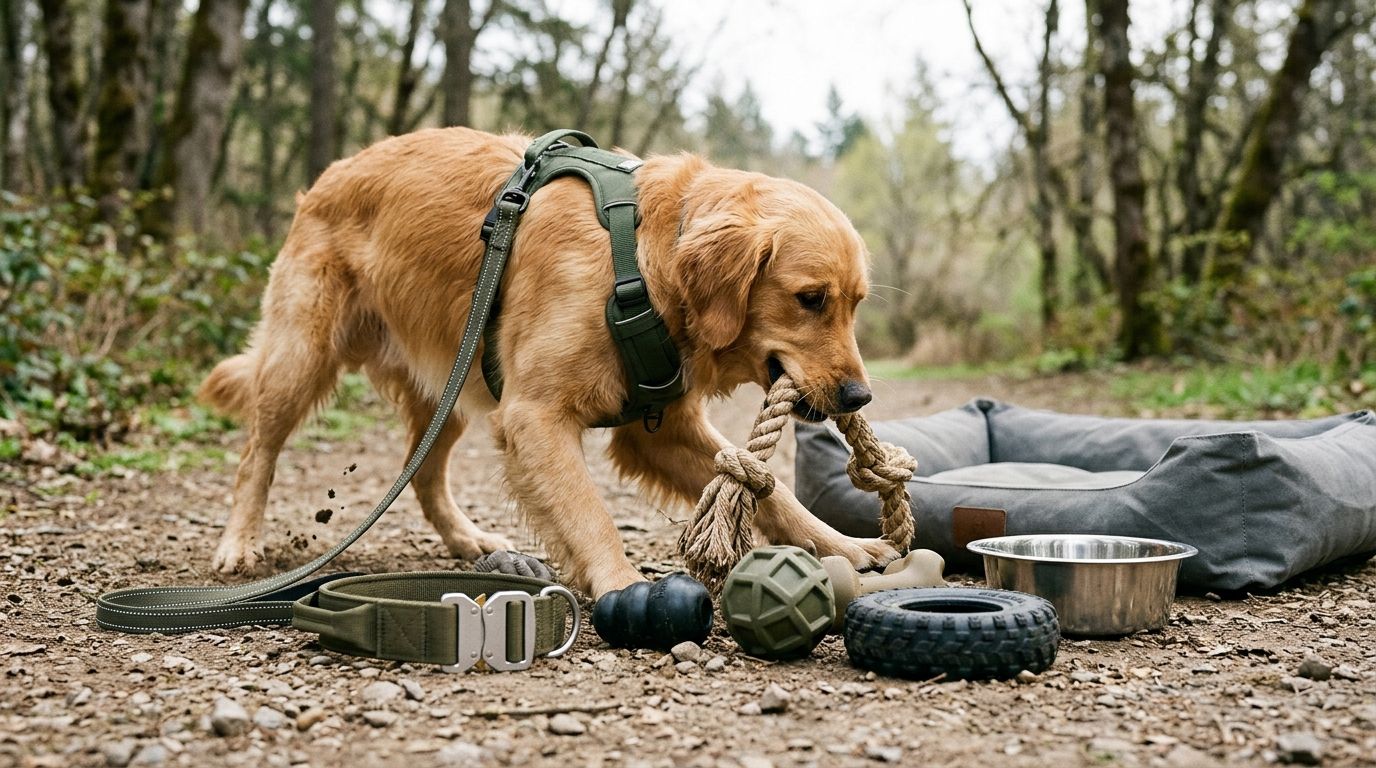
Some dogs cope with anxiety by chewing furniture, baseboards, or their own paws. A durable, breed-appropriate chew toy redirects that energy without turning it into a vet bill.
Calming chew pros:
- Directly addresses destructive chewing rather than just calming general mood
- Long-lasting options mean less frequent replacement
- Works well alongside crate training for dogs left alone
Calming chew cons:
- Wrong hardness for the breed either destroys the toy fast or does nothing
- Doesn't address the root anxiety trigger, only the chewing symptom
Best for: dogs whose anxiety shows up as destructive chewing. Verdict: Buy, matched to your dog's jaw strength.
How this list was ranked
Each category was scored against the six criteria above: anxiety-type match, calming mechanism, durability, unsupervised safety, ease of reset, and size fit. Snuffle mats and lick mats ranked highest because they combine a proven calming mechanism (scent work and licking) with broad applicability across anxiety types, not just one narrow scenario.
“If the toy doesn't match the specific anxious behavior, it just becomes an expensive chew toy that sits untouched.”
Which calming toy should you choose?
For most anxious dogs in 2026, start with a snuffle mat — it's the most versatile option and works across noise phobia, general restlessness, and mild separation anxiety alike. If separation anxiety is the specific problem, go with a frozen lick mat instead. If your dog is a destructive chewer when stressed, skip both and go straight to a breed-appropriate durable chew. Browse the broader pet supplies lineup at Vantora while you're comparing textures and sizes for your dog's breed.
FAQ
What's the best calming toy for anxious dogs?
Snuffle mats are the best overall pick in 2026 because the sniffing motion lowers arousal across almost any anxiety trigger. Lick mats are the better choice specifically for separation anxiety.
Do calming toys actually work for dog anxiety?
Toys that engage licking, sniffing, or chewing behaviors do measurably calm dogs by occupying the same mental pathways as anxious pacing or scanning. They work best as one part of a routine, not a standalone fix for severe anxiety.
Are lick mats better than snuffle mats for separation anxiety?
Yes, for separation anxiety specifically. A frozen lick mat provides 10-20 minutes of self-soothing licking right when a dog's anxiety spikes hardest, in the first minutes after you leave.
What calming toy works for small dog breeds?
Weighted plush toys and small-format snuffle mats tend to work best for small breeds, since they startle more easily and often need lower-intensity calming tools than large dogs.
Do puzzle feeders help with dog anxiety or just boredom?
Puzzle feeders mainly address boredom-driven restlessness rather than fear-based anxiety. Pair one with a lick mat or snuffle mat if your dog's anxiety has a true fear component.
How long does a calming toy take to work?
Lick mats and snuffle mats typically produce a calming effect within a few minutes of use, since the behavior itself (licking or sniffing) triggers the response. Weighted plush toys work more gradually as part of a settling routine.
Can puppies use the same calming toys as adult dogs?
Puppies do better with heartbeat or heat-pack plush toys during the first adjustment weeks, then transition to snuffle mats or lick mats as they mature. Durability requirements also shift as puppies develop stronger jaws.
What's the most durable calming toy for anxious chewers?
Durable calming chews built for the dog's specific jaw strength hold up best against anxious chewing. A snuffle mat or lick mat generally isn't durable enough for a dog that chews as its anxiety outlet.
One last thing
Rotating two calming toy types — say, a snuffle mat for daytime and a lick mat for when you leave — tends to outperform relying on one toy alone, since each targets a different anxious behavior instead of just one.